Click the image to enlarge.
1875
The Alviela aqueduct
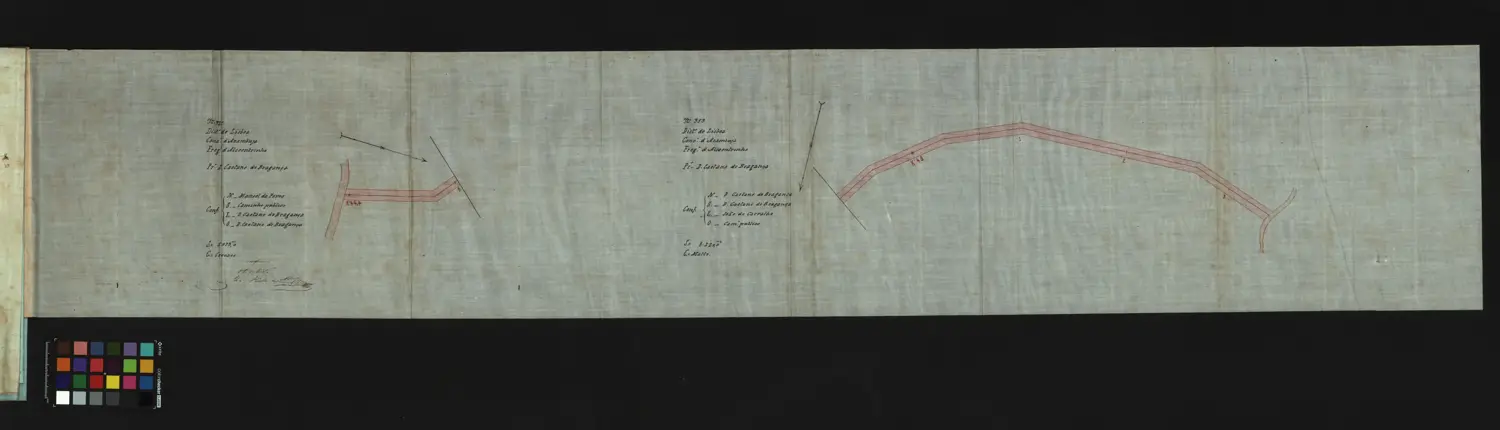
On 31 December 1875 D. Caetano cedes land on the quinta to the Lisbon Water Company for the Alviela canal. The plan marks the «Tunnel» running along the «Tapada da Torre Bella».
Museum · Room 4
The time of D. Caetano: the hunt, the aqueduct, the lodge and the contents of the palace.
Each document has its image, what it says in a few lines, the original passage and where it is kept. Quotations keep the spelling of the document.
Click the image to enlarge.
1875
On 31 December 1875 D. Caetano cedes land on the quinta to the Lisbon Water Company for the Alviela canal. The plan marks the «Tunnel» running along the «Tapada da Torre Bella».
Click the image to enlarge.
c. 1919
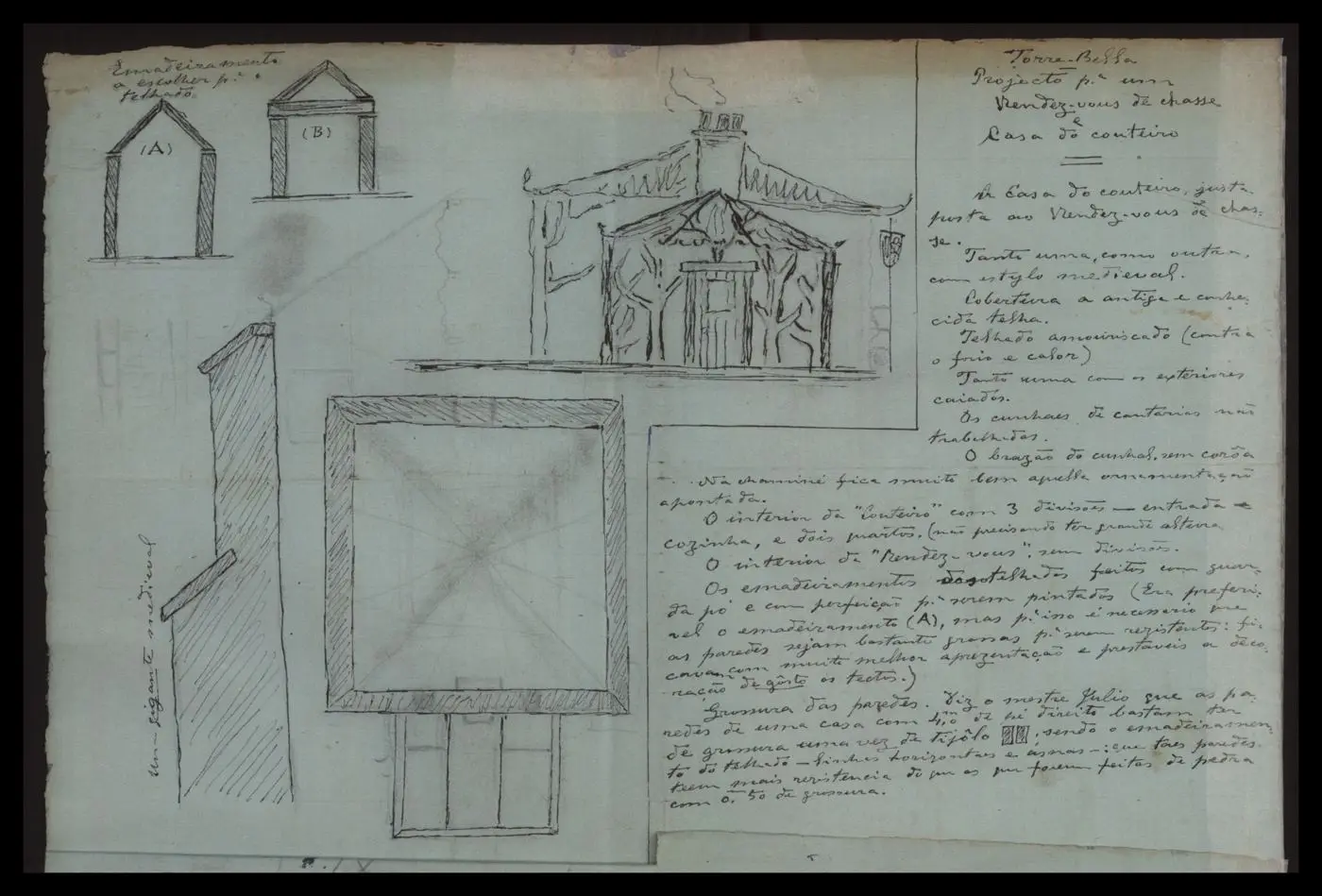
A hand-drawn project for a «rendez-vous de chasse» and a gamekeeper’s house, «in the medieval style». The plan was drawn on the back of a bank circular of April 1919. It is not known whether it was ever built.
«Tanto uma como outra, com estylo medieval»
Document shown without an image.
1925
On 10 March 1925 the Diário de Lisboa describes the park and the house: a wall of about 18 km, iron gates, the bull pen, Portuguese eaves, two turrets and, in the dining room, a chandelier made of antlers.
The writer tells how D. Caetano went hunting with his hounds across a vineyard his steward had planted in his absence.
«A tapada foi feita para caçar e para caçar eu a quero.»
Click the image to enlarge.
1946–1949
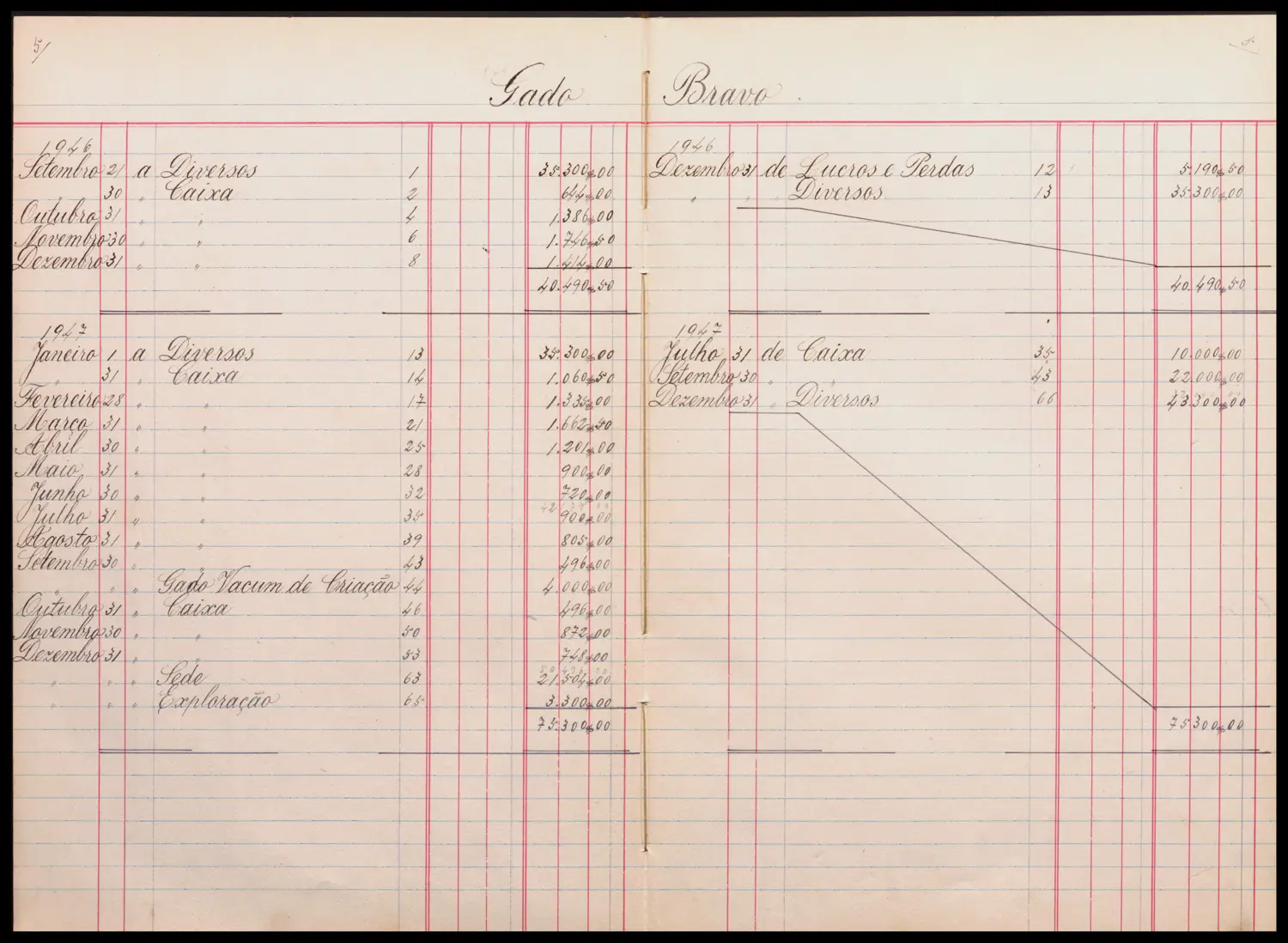
The ledgers show the estate at work: wine, olive oil from the mill, cereals, cork, fighting cattle and sheep, and accounts for tiles, bricks and lime. Cork was the largest source of income.
Click the image to enlarge.
1956
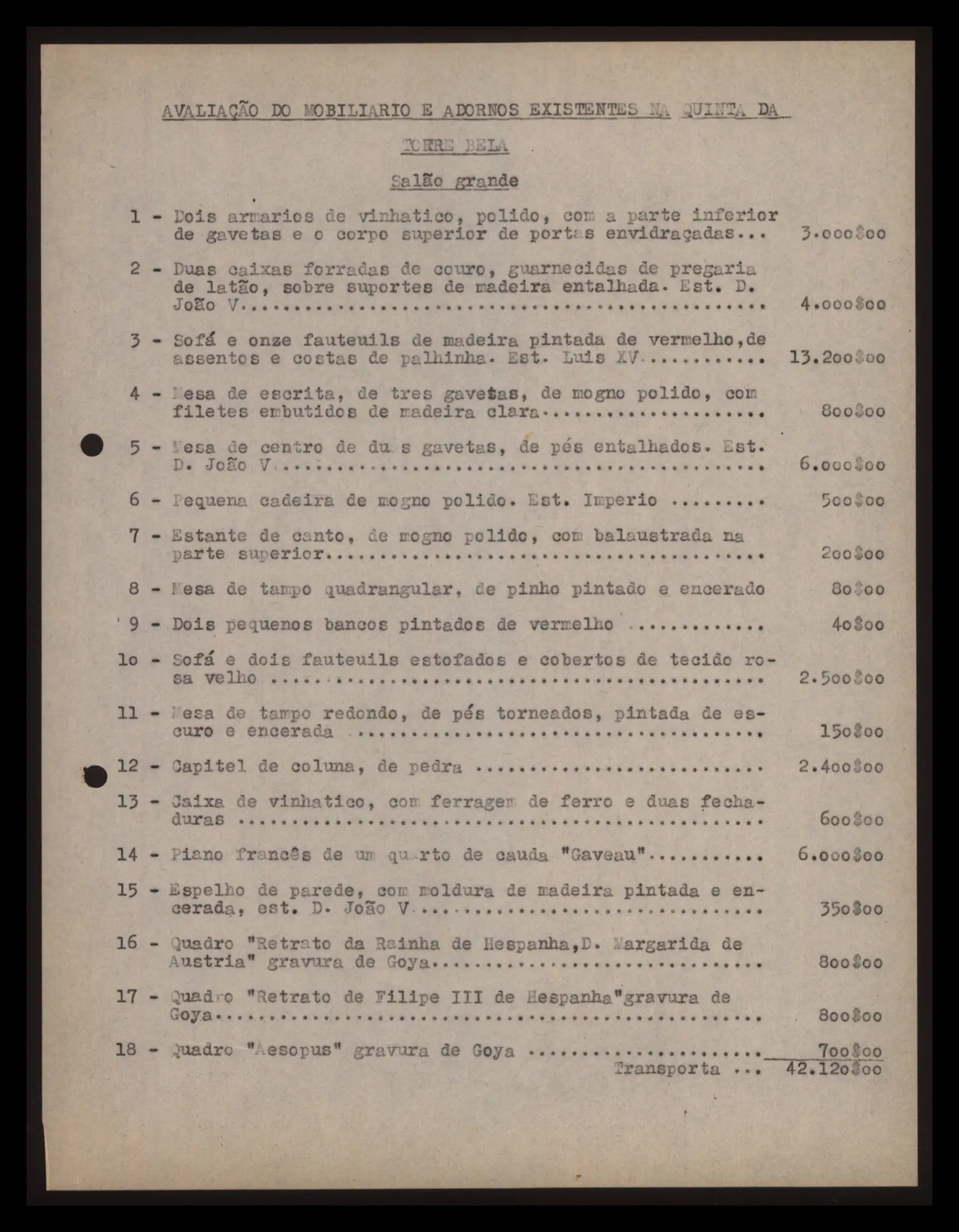
In August 1956 the firm Leiria & Nascimento appraises the palace furniture, room by room: 24 rooms and 255 entries, for a total of 276,386 escudos.
Among the pieces are a «Noah’s Ark» attributed to Bassano, a suit of armour of Marco Barbarigo, engravings by Goya, the six Apostles of the chapel and a Gaveau piano in the Great Hall.