Walled estate
Hunting and nature
A tourist hunting area and wildlife-watching area, in a walled estate with cork oak woodland and certified forest.
The Walled Estate
Wildlife roaming free within the wall
Within the historic wall live red deer, fallow deer, roe deer and wild boar — reintroduced by the current owner from the late 1990s — as well as partridges, rabbits and many birds. Big game is part of the history of the tapada: in 1747 the Diccionario Geografico already mentioned its red deer, fallow deer and wild boar.
In autumn, the red deer rut, the mating season, fills the estate with sound.
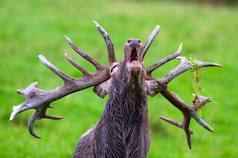
Red deer
The largest wild mammal on the estate. The rut takes place in September and October.
Fallow deer
Recognisable by its spotted coat and palmate antlers.
Roe deer
The smallest deer on the estate, discreet and active at dawn and dusk.
Wild boar
Found across the estate, especially in scrubland and forest.
Hunting
The hunting area
Torre Bela is a Tourist Hunting Area (ZCT 2491), granted to Sociedade Agrícola da Quinta do Convento da Visitação since 2001 and renewed in 2023 for a further twelve years. The walled estate is also a wildlife-watching area.
Hunting and wildlife watching: geral@quintadoconvento.pt
Suspension and resumption of hunting
In December 2020, during a driven hunt organised by third parties to whom the hunting rights had been assigned, about 270 animals were killed without the authorisation of the managing entity. The company filed a complaint with the Public Prosecutor, and the ICNF suspended hunting as a precaution while the facts were established.
The Public Prosecutor’s inquiry was closed in December 2025: it was established that no crime against the preservation of wildlife had occurred, and there was insufficient evidence of a crime of damage to nature. In January 2026 the ICNF Board revoked the suspension with immediate effect.
During the suspension, the population of red deer, fallow deer and wild boar grew from about 170 animals in 2021 to more than 400. The company began feeding the animals and protecting sensitive areas. With the suspension lifted, the management of the hunting area again aims at a population in balance with the habitat.
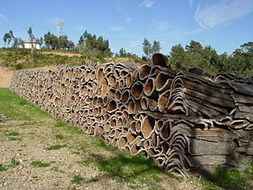
Forest & Montado
Forest under certified management
Eucalyptus, pine and cork oak, under certified forest management (GGFC KS-FM/COC-000034). The cork oak is a protected species in Portugal; cork is stripped at intervals of at least nine years.
Biodiversity
High conservation value areas
The estate’s forest management includes a biodiversity monitoring plan, followed by specialist technicians. High conservation value areas have been identified: riparian galleries, cork oak and stone pine stands, and the Alviela Canal, built from 1871, which crosses the estate along the Judeu stream.
Confirmed species include the common kestrel, the southern grey shrike, the cattle egret and a threatened bird of prey that nests on the estate. To avoid disturbing breeding, the location of sensitive areas is not disclosed, and forestry, hunting and maintenance work follows a protection calendar.